
Your body hasn't forgotten a thing.
ConTact C.A.R.E works with the self-protection patterns your skeleton has been quietly holding — and gives them permission to let go.

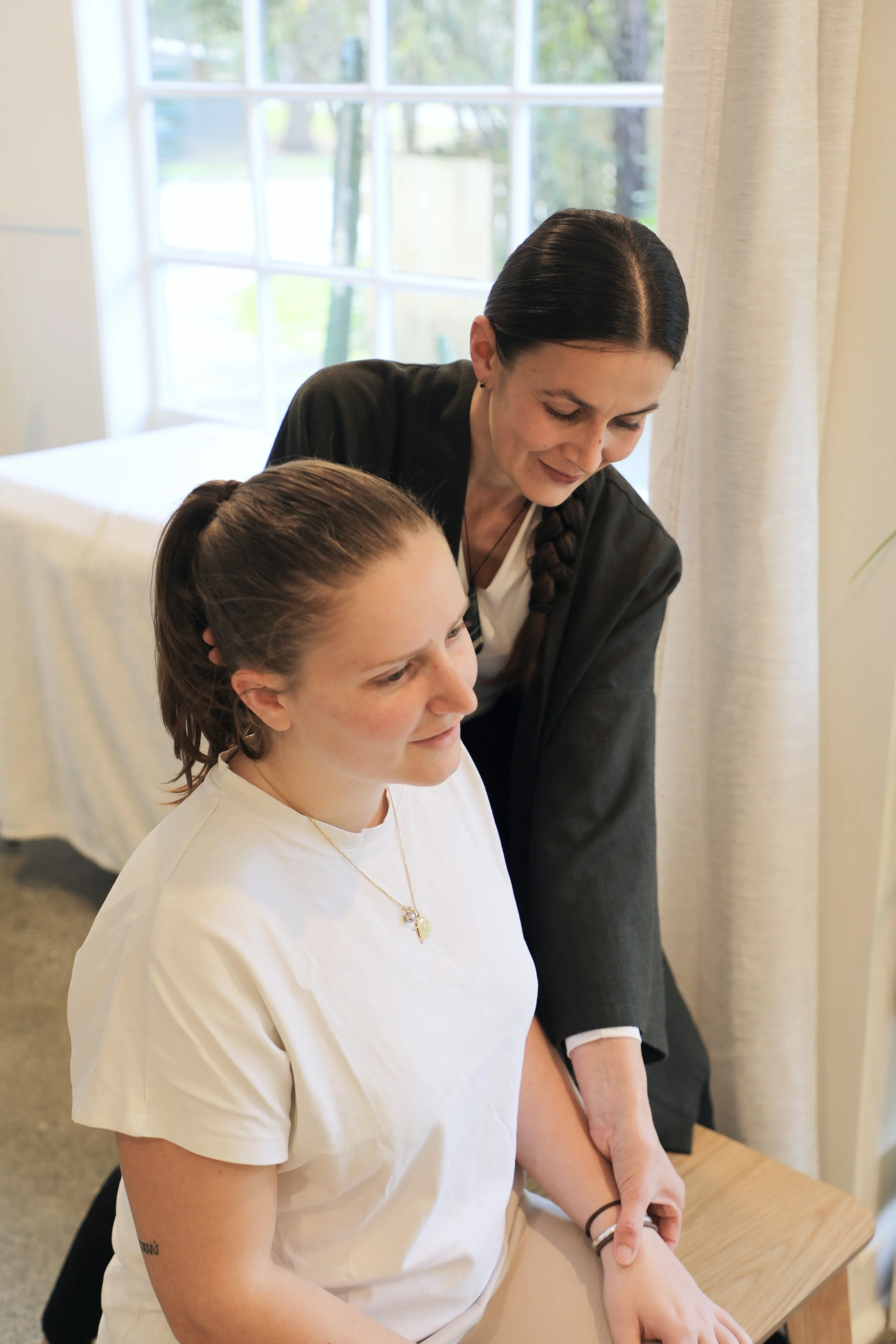
Your body has been working hard to protect you.
Sometimes that protection comes at a cost — movement that’s become guarded, energy that’s been diverted, a vitality that’s been quietly dimmed by the weight of what the body is carrying.
ConTact C.A.R.E Flinchlock Release is about restoring that vitality. Giving the body the conditions to release what it no longer needs, so you can move more freely, feel more like yourself, and engage with life more fully.
ConTact C.A.R.E Flinchlock Release is a martial arts-derived discipline that works with the body's own instinctive self-protection patterns. It is not a health service or medical treatment — think of it alongside Tai Chi: a practice rooted in martial arts tradition, working with the body through attentive, non-forceful hands-on contact.
The discipline is grounded in an understanding that martial artists and experienced stockmen have long shared: the body's survival response to surprise follows predictable geometry. When the skeleton escapes from unexpected force, it does so in specific, traceable directions. A trained practitioner learns to read that geometry — to see what isn't moving in a sea of movement — and to work precisely with what the body has stored.
Its expansion from a small town in the Hauraki Plains to practitioners across New Zealand and internationally is the story of a simple, commonsense observation that resonates — deeply and consistently — with everyone who experiences it.

-
ConTact C.A.R.E stands for Commonsense Approach to Real Ease. The "ConTact" is equally important — this is hands-on, physical work. It cannot be done remotely. A practitioner needs to be present with you, reading what the body is doing in real time.
The discipline is built on a simple but often overlooked relationship: bones are the scaffold of the body. They give shape, enable movement, and provide protection. Muscles function in response to that structure — they move what the structure allows them to move.
Martial artists understand this deeply. The body's survival response to surprise follows predictable geometry — a map of how the skeleton escapes, contracts, and repositions when unexpected force arrives. That geometry is consistent across people and across species. It can be observed, traced, and worked with.
When a self-protection pattern becomes stored in bone following a surprise impact, it changes the structure. And where structure changes, function follows. Movement becomes guarded. Certain ranges feel blocked. The body adapts around what it is holding — and that adaptation can accumulate quietly over years, layer by layer, dimming vitality without an obvious single cause.
ConTact C.A.R.E Flinchlock Release works at the structural level — with the skeleton's own instinctive self-protection geometry. Rather than working with the surface experience of restriction, it looks at what is held in the structure underneath. The Flinchlock Release method supports the stored self-protection pattern to unravel, and as the structure reorganises, function follows.
ConTact C.A.R.E is a martial arts discipline. It is not a medical treatment and does not replace professional medical advice. Evidence is anecdotal.
-
ConTact C.A.R.E deals specifically with the effect of surprise on the body. This is what sets it apart.
When did you last knock your shin on a tow-bar? Miss a step? Stub your little toe on a chair in the middle of the night? Notice a bruise with no idea how it got there? Maybe you slipped on your driveway on the way to get the mail, fell off your horse, got pulled by your dog faster than you could react, or stumbled on uneven ground on a hike. A sport injury, a fall, a car accident. All these little missed steps, near-missed bad accidents — they add up.
Most of the time we barely stop to register them. We flinch, we carry on, and we forget.
But here's what your body does: it remembers.
-
Not all physical experiences leave the same kind of impression. Gradual tension, chronic stress, and overuse pass through the brain first — the body processes them with some degree of awareness. Surprise does not. When impact arrives without warning, the skeleton responds before conscious thought has time to catch up. The body escapes — instinctively, automatically, and faster than the brain can register what is happening. The self-protection pattern is set before you even know it's happened.
ConTact C.A.R.E takes a different focus to massage, stretching, or manual therapy — working with the skeleton's instinctive response rather than muscle and tissue. It's a complementary approach, not a replacement or an upgrade.
When a self-protection pattern is stored in the skeleton following a surprise impact, it changes the structure that the muscles are working from. And when structure changes, function follows. The muscles aren't the problem — they're responding perfectly to the level of pressure held in the structure underneath.According to Dale Speedy's ConTact C.A.R.E perspective, every unexpected impact leaves an impression at the structural level. The bone contracts, pressure becomes trapped, and the rest of the body quietly reorganises itself to maintain balance. It is an extraordinary act of self-preservation — the body compensating, redistributing force, protecting movement, doing exactly what it needs to do in that moment.
The challenge is that these self-protection patterns often remain long after the original event has passed. One surprise follows another. One compensation builds upon the next. Layer after layer — like the skins of an onion. Over time, what we experience as discomfort, stiffness, imbalance, or restricted movement is often not where the story began. The place that feels it is frequently the place carrying the workload — not the original site that created it.
Within ConTact C.A.R.E, these stored sites of structural self-protection are known as Flinchlocks. Some develop from seemingly insignificant knocks. Others arise from significant events. Some have been present for decades, quietly weaving themselves into posture, balance, and movement since childhood.
-
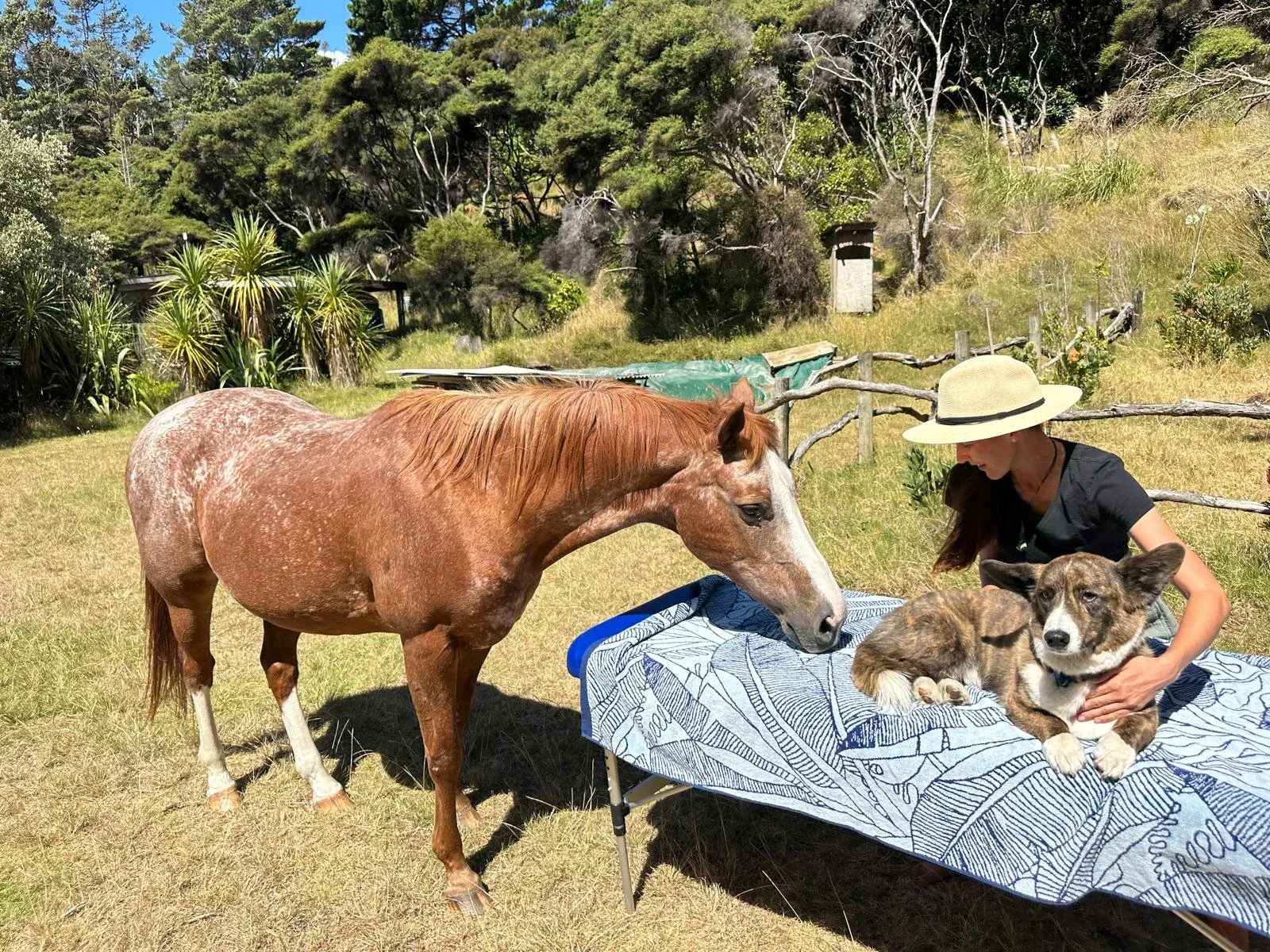
People find their way to ConTact C.A.R.E Flinchlock Release for all kinds of reasons. Some come after accidents — on the road, on the sports field, or at home. Some carry the effects of old impacts that were never quite resolved. Some arrive after surgery, wanting support as their body reorganises. Some come for their horses or animals. Some simply feel that something has been off for a long time and they haven't been able to put their finger on it.
What they share is a sense that the body has been holding on — and a curiosity about what might shift if it didn't have to any more.
-
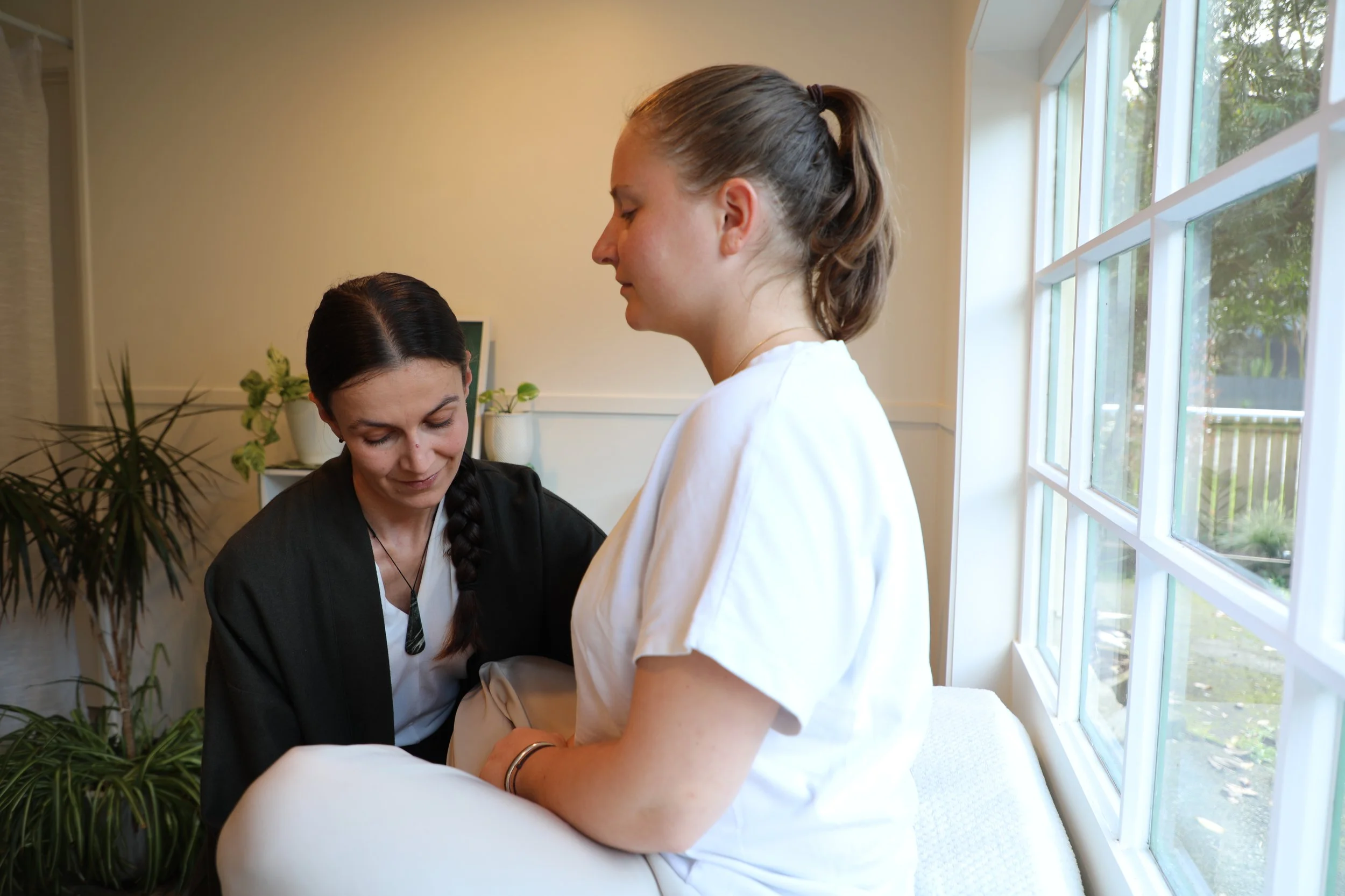
Sessions are gentle, fully clothed, and guided entirely by your comfort. There’s no cracking, no manipulation, no being pushed through discomfort. You’re in charge of your position the whole time — if sitting turns into lying down halfway through because that’s what feels right, that’s completely fine. Sometimes those instinctive shifts are the most useful information in the room.
We usually start with a brief conversation about what you’re noticing and what you’d like to focus on. From there, the practitioner observes and listens — to how your body responds, to what holds still in the middle of movement, to what’s ready to shift. The release itself is subtle. People often describe leaving feeling lighter, more settled, or simply more spacious in their own skin.
Around 90% of our clients come to us through word-of-mouth recommendations. Many are referred by friends, family members, or colleagues who have experienced ConTact C.A.R.E themselves. We are grateful for the trust people place in us when they recommend our work to someone they care about.
Everyone responds differently. Some clients report noticing changes within their first few sessions, while others describe a more gradual experience over time.
Individual experiences and outcomes vary.